
Ural engineering tradition.
Generations of expertise.
Engineering the future.
The institute’s history through events, people and projects.
Explore the timeline
Chapter 01
An engineering tradition begins
1925
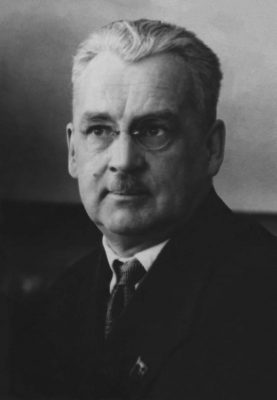
The institute traces its origins to the first engineering design organization in the Urals, established in Sverdlovsk in August 1925 as the Bureau for the Design of New Plants and the Preparation of Plans to Re-equip Existing Plants. In November that year it was named the Ural Regional Technical Bureau, or Uralproektbyuro. Its task was to develop a plan for modernizing the region’s industry. Vitaly Alekseyevich Gasselblat, who had managed Ural enterprises before the revolution, was appointed its head.
More about this period
The regional leadership envisaged Uralproektbyuro as an organization for designing new metallurgical plants and reconstructing existing enterprises.
1926
In 1926, the Institute for the Design and Construction of New Metallurgical Plants, Gipromez, was founded in Leningrad. In February 1926, Uralproektbyuro became its Ural branch.
1927
In July 1927, the Ural branch of the State Institute for the Design of New Metallurgical Plants received the name Uralgipromez.
Early projects
From its earliest years, Uralgipromez was entrusted with major responsibilities in restoring the economy after the Civil War and supporting industrialization. Fighting in the metallurgical regions of the Urals and the south had sharply reduced metal production. Plants with outdated equipment and low labour productivity could not meet rising demand, making the development of metallurgy in Russia and the Urals a major state priority.
More about this period
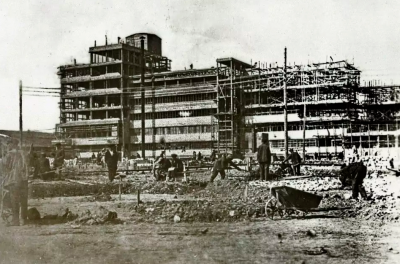
Among the institute’s first assignments were designs for enterprises that laid the foundations of Soviet metallurgy: the Magnitogorsk Iron and Steel Works, Ural Machine-Building Plant, Ural Wagon-Building Plant, Nizhny Tagil Iron and Steel Works, Krasnouralsk Copper Smelter and others. Reconstruction designs for existing plants were developed at the same time.
1930
By 1930, extensive industrialization work in the eastern part of the country had become necessary, driven by changes in heavy industry and the need to reorganize the management of metallurgical production.
1931
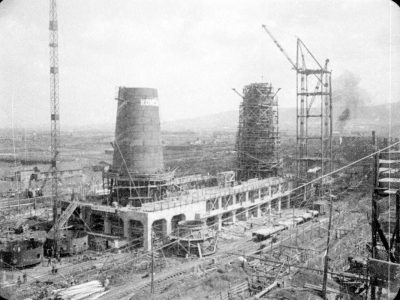
In March 1931, Uralgipromez was reorganized as an independent State Institute for the Design of Metallurgical Plants in the Eastern USSR. It was renamed Vostokgipromez and placed under the Vostokstal trust.
The 1930s
By the mid-1930s, Uralgipromez–Vostokgipromez was dissolved to bring design work closer to industrial enterprises and strengthen Ural plants with qualified technical specialists. Staff were assigned to plant design bureaus and directly participated in the construction of Magnitogorsk, Uralmash and other enterprises. Many specialists moved to newly established sectoral institutes, including Uralgiproruda, Uralgipromash and PromstroyNIIproekt.
1938
By the middle of 1938, Sverdlovsk, as a major industrial centre, again needed an organization capable of meeting the full range of its plants’ engineering design requirements.
1939
In February 1939, the Ural branch of the State Institute for the Design of Metallurgical Plants was re-established.
Chapter 02
The institute during wartime
1941
During the Great Patriotic War, metallurgy in the Urals took on an even greater role. Metal produced by Ural and Siberian plants was used for everything from entrenching tools to shells and tanks. The Urals produced 60% of ferrous metals and 40% of military output.
More about this period
In August 1941, the entire Uralgipromez team joined Gipromez, which had been evacuated from Leningrad to Sverdlovsk. The former Uralgipromez staff continued to work within Gipromez for almost three years.
1944
During these years, Uralgipromez and Gipromez designed facilities in the Urals to accommodate evacuated workshops and plants. They helped convert enterprises to wartime production, supporting supplies of armour plate, shell billets and other semifinished products to the defence industry. Metallurgical development work also continued in Uzbekistan and Kazakhstan.
More about this period
In March 1944, Gipromez moved to Moscow. At the same time, its Sverdlovsk branch was established, consisting mainly of former Uralgipromez employees. The experienced, cohesive team was able to begin work immediately.
Chapter 03
Reconstruction and development
Post-war development
After the Great Patriotic War, economic reconstruction and extensive building programmes created an unprecedented demand for metal products.
More about this period
In the post-war years, Uralgipromez designs were used to build and reconstruct major plants and workshops producing pig iron, steel, rolled products and pipes. The institute addressed the reconstruction, development and repurposing of older Ural plants.
Its designers incorporated advances in science and engineering, modern equipment and progressive process solutions to help products meet international standards. Patented inventions were also used, and planned capacity and technical and economic targets were achieved ahead of schedule.
As metallurgy is a major fuel consumer, the institute devoted a significant share of its work to energy facilities, process intensification, the use of secondary energy resources and related issues.
1958
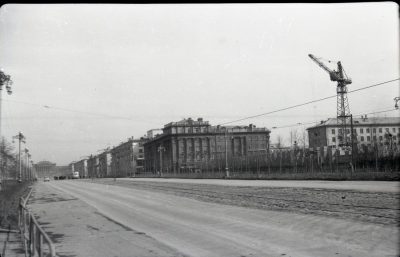
In February 1958, Uralgipromez began operating as an independent State Design Institute under the USSR Ministry of Ferrous Metallurgy.
Chapter 04
Engineering on an industrial scale
1975
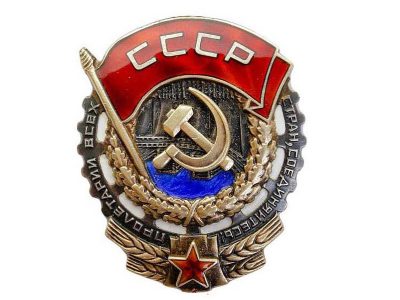
In August 1975, Uralgipromez was awarded the Order of the Red Banner of Labour for its achievements in designing new metallurgical enterprises, reconstructing existing facilities and contributing to the development of the country’s ferrous metallurgy.
1976 - 1990
Between 1976 and 1990, Uralgipromez worked extensively on the development and modernization of metallurgical and pipe-making plants, serving as general designer for most metallurgical enterprises in the Urals.
1979
In 1979, Uralgipromez introduced an integrated quality management system incorporating enterprise standards and regulatory documents. It significantly improved the quality of design documentation. Staff development activities were held annually.
Chapter 05
A new corporate structure
1994
In 1994, Uralgipromez was reorganized into an open-type joint-stock company, AOOT. Despite subsequent organizational changes, it retained the character of a sectoral engineering institute and general designer.
1996
In July 1996, AOOT Uralgipromez was reorganized as an open joint-stock company, OAO Uralgipromez.
Chapter 06
The institute’s centenary
2025
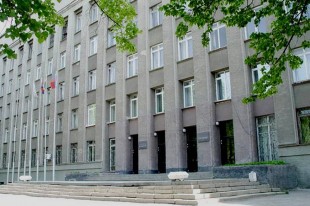
Uralgipromez is a modern multidisciplinary organization engaged in the design and construction of industrial and civil facilities. Its metallurgical clients include Seversky Pipe Plant, Pervouralsk New Pipe Plant, Amurmetal, Chelyabinsk Electrometallurgical Plant, Uralelectromed, Karabashmed and many others.
Texts and photographs from the institute’s archive.
Back to the institute